
Train Travel Payment Practices Report 2020
UK Train Travel Payment Practices: Above Average, But With Concerning Laggards
The Numbers
- Number of companies analysed: 9
- Average PaymentCheck Score (Train Travel): 53.2/100
- UK average PaymentCheck Score: 50.0/100
- Train Travel sector performance above UK average: 3.2 points
- Highest score: 88.5/100 (MERSEYRAIL ELECTRICS 2002 LIMITED)
- Lowest score: 28.2/100 (HITACHI RAIL LIMITED)
- Regional analysis covered: North West, East Midlands, North East, London, South East.
What Stands Out
While the UK train travel sector scores a slightly above-average 53.2 out of 100, the significant disparity between the top and bottom performers – a 60.3-point difference between MERSEYRAIL and HITACHI RAIL – reveals substantial inconsistencies in payment practices. The concentration of companies in the London region (5 out of 9) coupled with a below-average regional score suggests a possible systemic challenge in the capital.
Best Payers
- MERSEYRAIL ELECTRICS 2002 LIMITED - 88.5/100
- TRANSPORT UK EAST ANGLIA LIMITED - 57.9/100
- EUROSTAR INTERNATIONAL LIMITED - 57.05/100
- PANDROL LIMITED - 52.5/100
- THE CHILTERN RAILWAY COMPANY LIMITED - 52.1/100
Worst Payers
- HITACHI RAIL LIMITED - 28.2/100
- UNIPART RAIL LIMITED - 45/100
- SIEMENS MOBILITY LIMITED - 46.17/100
- WEST MIDLANDS TRAINS LIMITED - 51.4/100
- THE CHILTERN RAILWAY COMPANY LIMITED - 52.1/100
Regional Patterns
The North West, with a single representative, boasts the highest regional average at 88.5, driven by MERSEYRAIL's strong performance. Conversely, the South East only included one company, UNIPART RAIL LIMITED with a score of 45/100. London’s performance is also concerning, with five companies averaging just 48.1, pulling down the overall sector average.
Use this late payment calculator to see how much you may be owed.
Ultimately, while the train travel sector edges above the UK average by 3.2 points, the concerning 60.3 point difference between the best and worst payers suggests a need for closer examination of payment practices within the industry, particularly in London and the South East.
Read next
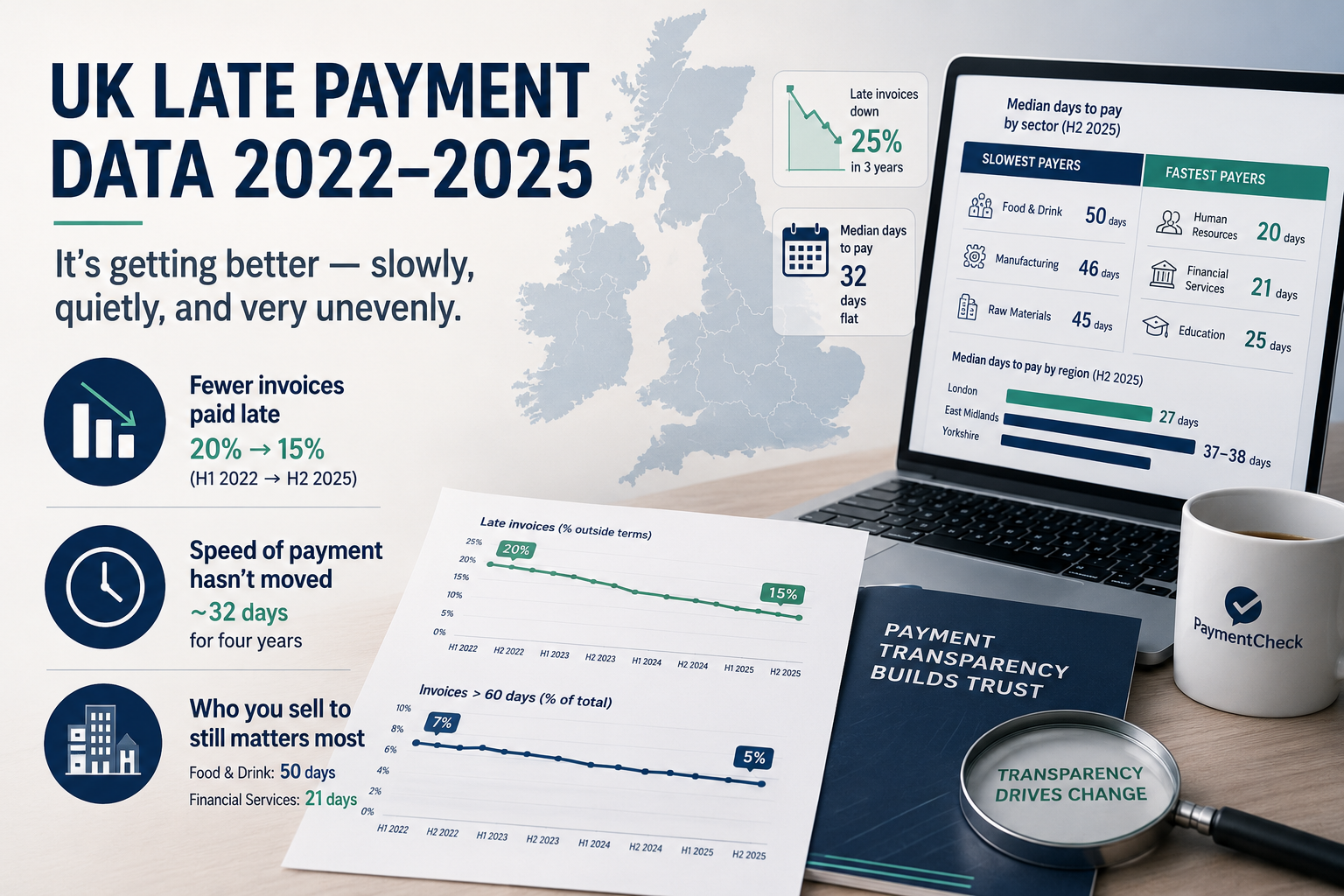
Late payment in the UK is quietly improving — but your invoice still depends on who you sell to
We analysed over 100,000 published UK payment-practice reports. Late payment is falling — from 20% of invoices paid outs
UK Company Payment Practices 2025: Biggest Risers, Fallers & New Entrants
How UK companies' payment practices changed in 2025 — the biggest improvers, the firms slipping, and the strongest new e
Agriculture Payment Practices Report 2025
The UK agriculture sector is significantly outperforming the UK average for payment practices, suggesting a degree of fi
Northern Ireland Payment Trends: 2024 vs 2025
The year-on-year decline of 0.1 points, while statistically insignificant, suggests a stagnation in payment performance